
Unit 731: What the 1947 American Records Reveal
The Unit 731 records establish that American officials believed the programme possessed potentially valuable biological-warfare information and that this belief influenced the decision not to prosecute its senior figures.
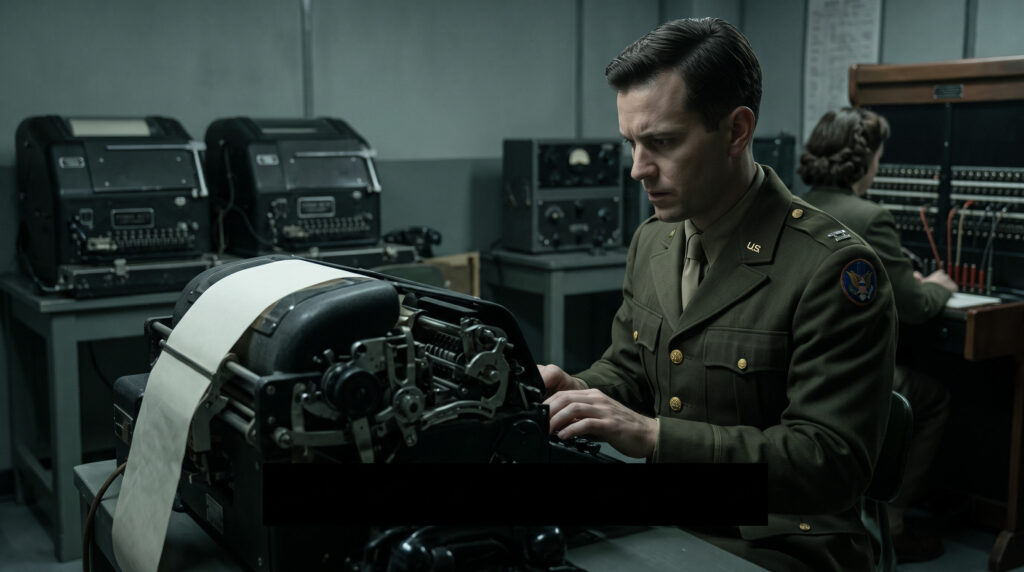
What American Investigators Knew by 1947
American specialists began investigating Japan’s biological-warfare programme soon after the surrender. Lieutenant Colonel Murray Sanders questioned Japanese scientists in 1945, but his first report contained no disclosure of human experimentation. The researchers presented their work as defensive and remained evasive about activities at Pingfang.
Further interrogations, letters and witness statements gradually produced a different picture. By 1947, American authorities had accumulated evidence that prisoners had been deliberately infected with disease and used in lethal experiments. Shirō Ishii and his associates now faced the possibility of prosecution, but they also understood that their knowledge had intelligence value.
What Message C‑52423 Proposed
On 6 May 1947, message C‑52423 was sent from General Douglas MacArthur’s Far East Command to War Department intelligence in Washington. It reported that human experimentation had been tacitly confirmed and outlined how additional information might be obtained.
The message proposed assuring the Japanese researchers that their disclosures would remain within intelligence channels and would not be used as evidence in war-crimes proceedings. It did not represent one final, publicly declared immunity agreement. It was part of a wider process through which access to information became connected to protection from prosecution.
Why the Soviet Union Changed the Calculation
The Soviet Union had captured Japanese biological-warfare personnel in Manchuria and wanted access to others being held under American control. American military and intelligence officials feared that the Soviet authorities would obtain information the United States wanted to examine and retain for itself.
When Soviet questioning was eventually permitted, American authorities controlled the process. Japanese scientists were instructed not to disclose human experimentation, biological attacks in China, the mass production of plague-infected fleas or the programme’s chain of command. The emerging Cold War had increased the perceived intelligence value of Unit 731’s research.
What Hill and Victor Reported
In the autumn of 1947, Camp Detrick scientists Edwin Hill and Joseph Victor travelled to Japan to conduct a deeper investigation. They questioned Ishii and other specialists about plague, typhus, cholera and additional diseases, including information derived from experiments on human beings.
Their December report stated that the investigation had substantially expanded American knowledge of biological warfare. It described information about human susceptibility and the infectious doses required to produce disease—information the investigators acknowledged could not be obtained in American laboratories because of the ethical objections surrounding human experimentation.
Hill and Victor estimated that the United States had spent approximately 250,000 yen obtaining research that had cost Japan millions of yen and years of work. They characterised the American expenditure as a mere pittance. Their calculation placed a monetary value on the information while excluding the human cost of producing it.
Was There a Formal Immunity Deal?
The surviving evidence does not reveal one dramatic meeting or a single signed document granting blanket immunity to every Unit 731 member. The arrangement developed through communications between occupation authorities, military scientists, intelligence officers and officials in Washington. Different agencies did not always agree, and the State Department warned that protecting the researchers could cause serious embarrassment to the United States.
Focusing only on the absence of one formal agreement can obscure the outcome. The records document demands for protection, restrictions on disclosure, controlled questioning and official decisions that discouraged prosecution. By early 1948, key Unit 731 figures had avoided trial with the assistance of American scientific and intelligence officials.
What the Unit 731 Records Prove—and What They Do Not
The records establish that American officials believed Unit 731 possessed potentially valuable biological-warfare information and that this belief influenced the decision not to prosecute its senior figures. They do not prove that every experiment was scientifically reliable, that the programme produced a dependable biological weapon or that its findings later transformed medicine.
Some experiments may have been methodical. Others were poorly documented, uncontrolled or incapable of supporting the conclusions later attributed to them. The perceived value of the information and its actual scientific quality are separate questions.
Preserving the records and prosecuting the people responsible were not inherently incompatible. The information could have been retained and presented as evidence. Instead, secrecy and intelligence priorities helped provide a route away from prosecution for the men who controlled it.
Why the 1947 Decision Still Matters
National security explains why American officials wanted the information and feared it reaching the Soviet Union. It does not erase the choice they made. The people used in Unit 731’s experiments had no control over what was done to them and no voice in the negotiations that followed their deaths.
For the researchers who controlled the evidence, disclosure became a path away from prosecution. For the victims, preserving that evidence now serves a different purpose: ensuring that neither the experiments nor the arrangement that followed them can disappear again.
Watch the complete documentary investigation: Unit 731: Why America Protected Its Leaders.