
Puma Punku — The Impossible Stonework Expanded Evidence Pack (Complete Edition)
$ 19.00
Expanded Evidence Pack examining Puma Punku’s precision stonework, modular engineering system, and the limits of current archaeological explanation.
34-page illustrated PDF • Expanded Evidence Pack v1.1 (Complete Edition) • Ancient Engineering, Tiwanaku, Stone Precision, Measurement Systems
This Research File supports EP04 — Puma Punku: Impossible Stonework.
How could stone architecture of such precision exist in the ancient world without iron tools, modern machinery, or formal engineering systems?
This publication is the Expanded Evidence Pack (Complete Edition) of the DidjaKnow research file examining Puma Punku, one of the most technically perplexing stone complexes ever constructed. It functions as a documentary-grade reference document, extending beyond the standard research edition with expanded technical analysis, structured appendices, and clearly defined methodological boundaries.
The investigation applies a calm, evidence-first archaeological and engineering framework. It documents what is physically present at the site — the stone materials, modular geometry, surface finishes, metal clamp systems, and construction logic — while clearly distinguishing between what mainstream archaeology can confidently support and where explanations remain incomplete. Claims are constrained by excavation data, material science, experimental archaeology, and comparative Andean research, with speculation deliberately excluded.
The expanded analysis explains why Puma Punku continues to challenge conventional explanations. The issue is not whether the stone could be shaped — experimental archaeology shows it can — but how such repeatable precision, modular standardisation, and tight tolerances were achieved across dozens of blocks in extremely hard stone. The research examines the site’s location within the Tiwanaku complex, its high-altitude environmental constraints, the deliberate use of sandstone and andesite for different engineering purposes, and the architectural logic behind the iconic H-blocks.
Extended sections evaluate the organisational challenge behind the site — long-term planning, skilled labour coordination, measurement discipline, and integrated stone-metal construction — without invoking lost civilisations, advanced forgotten technologies, or non-human builders. The file also addresses why extreme claims persist, clarifying how unresolved technical questions can be misused when evidence boundaries are ignored.
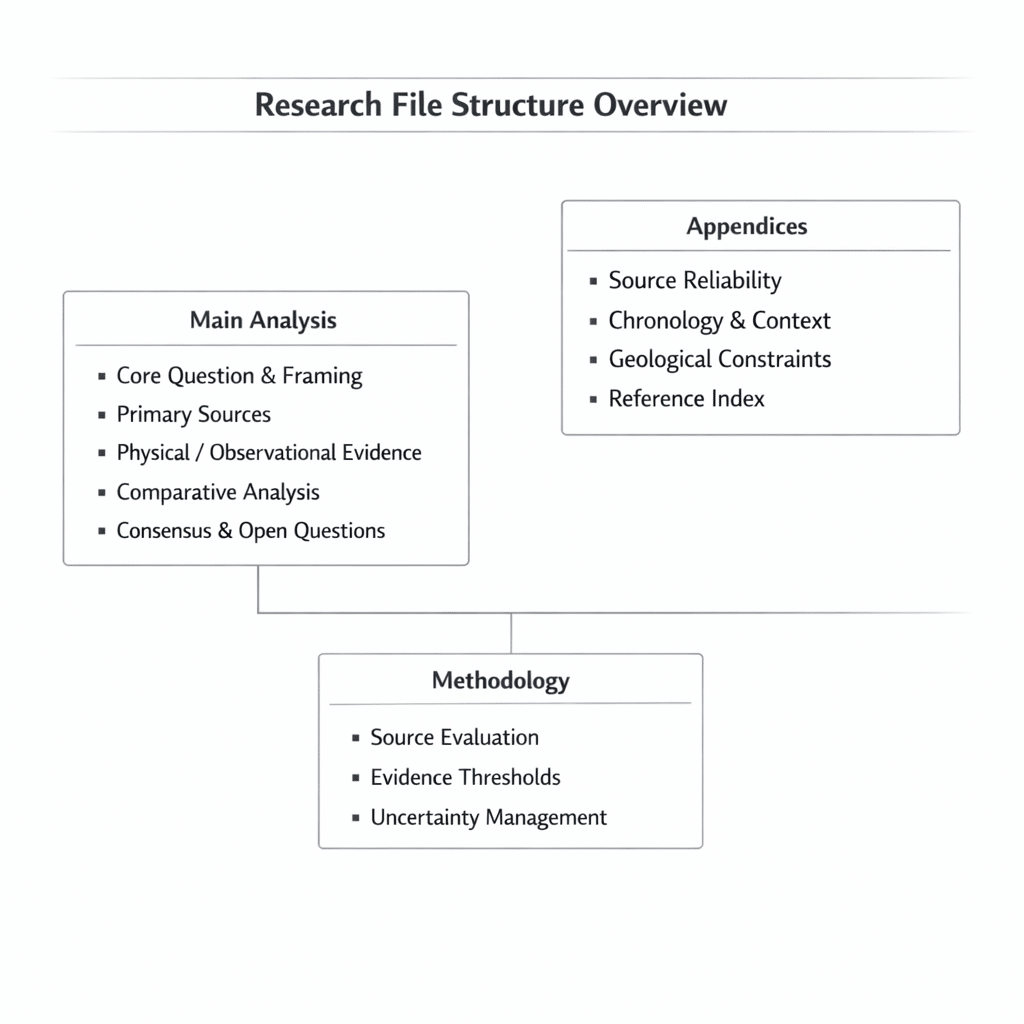
Included investigations and materials cover:
• Core framing of the Puma Punku engineering problem
• Geographic, cultural, and environmental context
• Material science of sandstone and andesite
• Modular planning and standardisation evidence
• H-block functional analysis
• Surface finish, tolerances, and angular precision
• Metal clamp systems and metallurgical implications
• Quarrying, transport, and logistical constraints
• Tooling capabilities and experimental findings
• Measurement systems and geometric consistency
• Reconstructed construction sequencing
• Damage, displacement, and interpretive risks
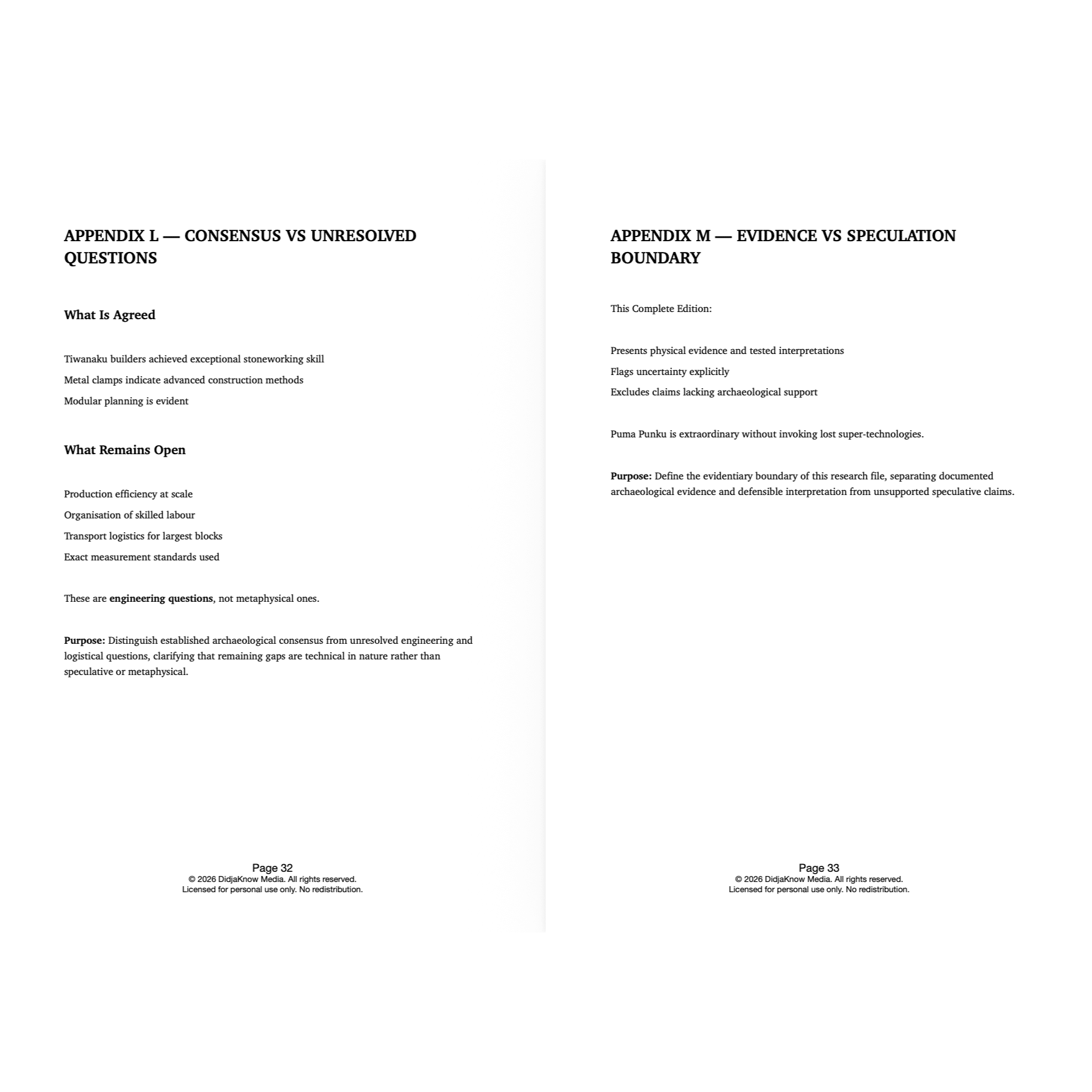
• Mainstream archaeological consensus
• Clearly defined unresolved engineering questions
• Expanded appendices separating evidence from speculation
• Primary source index for traceable research entry points
This Expanded Evidence Pack does not claim lost super-technologies, does not propose extraterrestrial involvement, and does not resolve unanswered questions beyond the archaeological record. It treats Puma Punku as extraordinary within mainstream evidence — not as justification for extreme narratives.
It is intended for readers seeking a rigorous, methodologically transparent understanding of why Puma Punku remains one of archaeology’s most challenging engineering sites, what is genuinely known, and where legitimate uncertainty remains.
The document is written as a long-form reference for careful study, not as a narrative or speculative reinterpretation.
Format: Digital eBook (PDF)
Delivery: Instant download after purchase
Edition: Expanded Evidence Pack — Complete Edition (v1.1)
Reviews
There are no reviews yet.