
EP01 — Atlantis in Mauritania
The Eye of the Sahara
Episode Shorts
Short-form companion clips from this investigation, created for quick viewing and sharing.
Atlantis in Mauritania: The Eye of the Sahara Hypothesis
Atlantis in Mauritania is re-examined in this episode through a grounded, evidence-driven investigation of Plato’s original accounts.. We analyse the detailed descriptions recorded in Timaeus and Critias—including concentric rings, geographic orientation, scale, and environmental context—and compare them with the physical characteristics of the Richat Structure in the Sahara. The episode also explores palaeoclimate evidence showing that this region was once rich in water, vegetation, and life, challenging the assumption that Atlantis must have been a submerged city.
Mainstream geological explanations identifying the Richat Structure as a natural formation are presented alongside satellite data, ancient river systems, and geographic correspondences that raise unresolved questions. Rather than claiming proof, this investigation focuses on where established science provides clarity—and where gaps remain—inviting a careful reassessment of whether the Atlantis account was pure allegory, misinterpreted geography, or a distant memory of a real place altered by deep time and climate change.
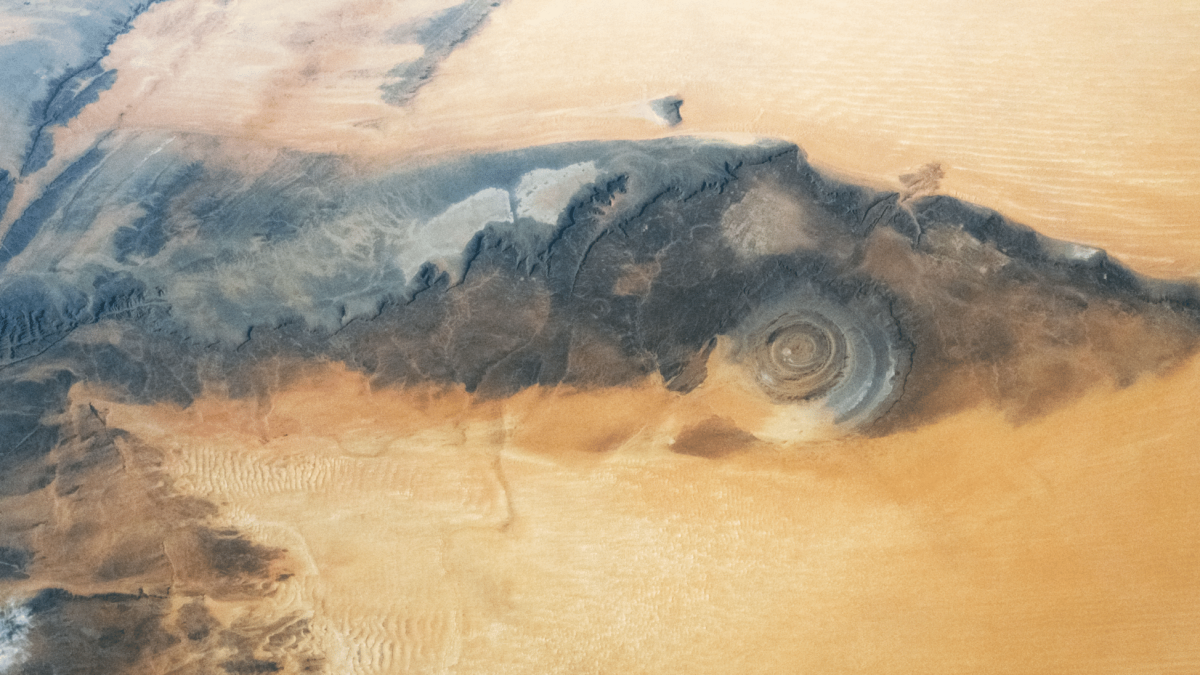
Satellite imagery from NASA’s Earth Observatory further documents the geological formation of the Richat Structure.
Explore the full Episodes archive to see every DidjaKnow investigation.
Atlantis in Mauritania is re-examined in this episode through a grounded, evidence-driven investigation of Plato’s original accounts. Questioning whether the lost civilisation was submerged by the sea—or erased by climate and time in North Africa.
We analyse the detailed descriptions in Timaeus and Critias and compare them with the scale, geometry, and setting of the Richat Structure, alongside evidence that the Sahara was once rich in rivers, lakes, and life.
Mainstream geological explanations are presented alongside unresolved geographic and environmental correspondences, focusing on what the evidence does—and does not—allow us to conclude about whether Atlantis was legend, allegory, or a real place altered beyond recognition.
Satellite imagery from NASA’s Earth Observatory further documents the geological formation of the Richat Structure.
Explore the full Episodes archive to see every DidjaKnow investigation.
The Richat Structure
Available Materials
This investigation is supported by detailed documentation in our Research Files library. A narrated edition of this investigation is available in the Audio Library. All materials related to this investigation are available as paid digital products. Select a format below to view details and purchase options.
Research Files
Research File — Expanded Evidence Pack
An extended evidence pack containing expanded sources, diagrams, contextual analysis, and deeper examination of unresolved questions raised in the investigation.
Research File — Standard Edition
A concise, episode-anchored research brief summarising the core claims, key evidence, primary sources, and the main questions examined in the investigation.
Audio Editions
Audio — Public Documentary Edition
A narrated audio edition of the documentary investigation, produced for general listeners and delivered as a paid digital audio product.
Audio — Radio Broadcast Edition
A broadcast-ready audio edition designed for licensed radio and professional use, supplied as a paid digital product following purchase.
eBook's Containing This Episode
Unresolved Foundations of Early Civilisation — Volume I
Volume I: Unresolved Foundations of Early Civilisation is a long-form documentary eBook that brings together six carefully selected archaeological investigations examined during the first phase of the DidjaKnow project.
Unresolved Earth
A screen-first documentary eBook bringing together six in-depth investigations into ancient history, geology, and long-standing anomalies that continue to challenge conventional explanations.
Get Email Updates
Stay informed when new investigations, research files, and documentaries are released.
Thank you!
You have successfully joined our subscriber list.
