
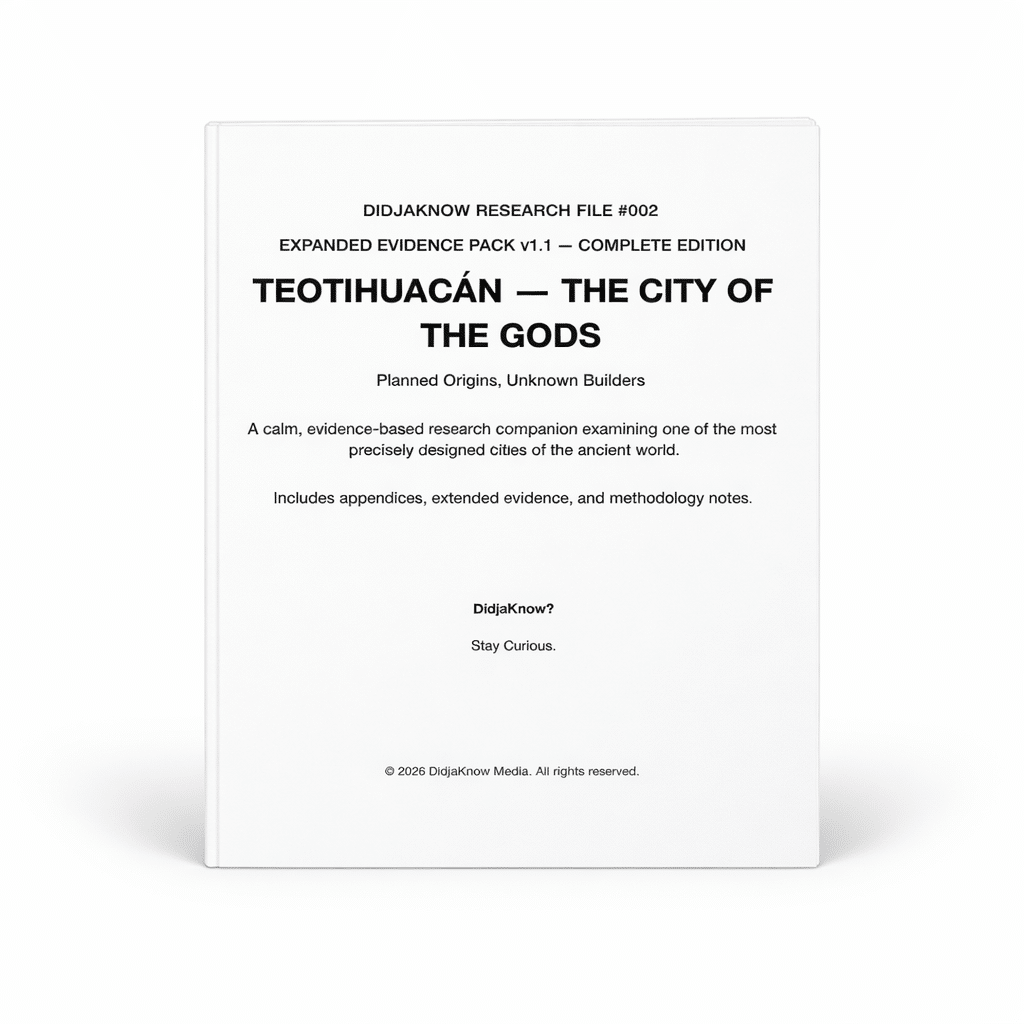
Teotihuacán — The City of the Gods
$ 19.00
Expanded Evidence Pack examining Teotihuacán’s planned urban grid, 15.5° alignment, governance models, construction methods, and documented limits of archaeological certainty.
27-page illustrated PDF • Expanded Evidence Pack v1.1 — Complete Edition • Urban planning • Alignment data • Governance models • Construction science • Decline evidence
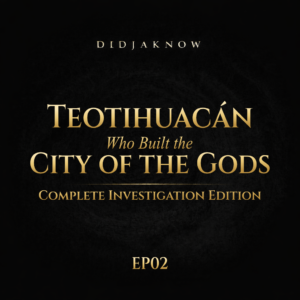
This Research File supports EP02 — Teotihuacán: The City of the Gods.
How did a city of this scale, precision, and long-term planning emerge without a known ruling dynasty, deciphered writing system, or clear historical narrative?
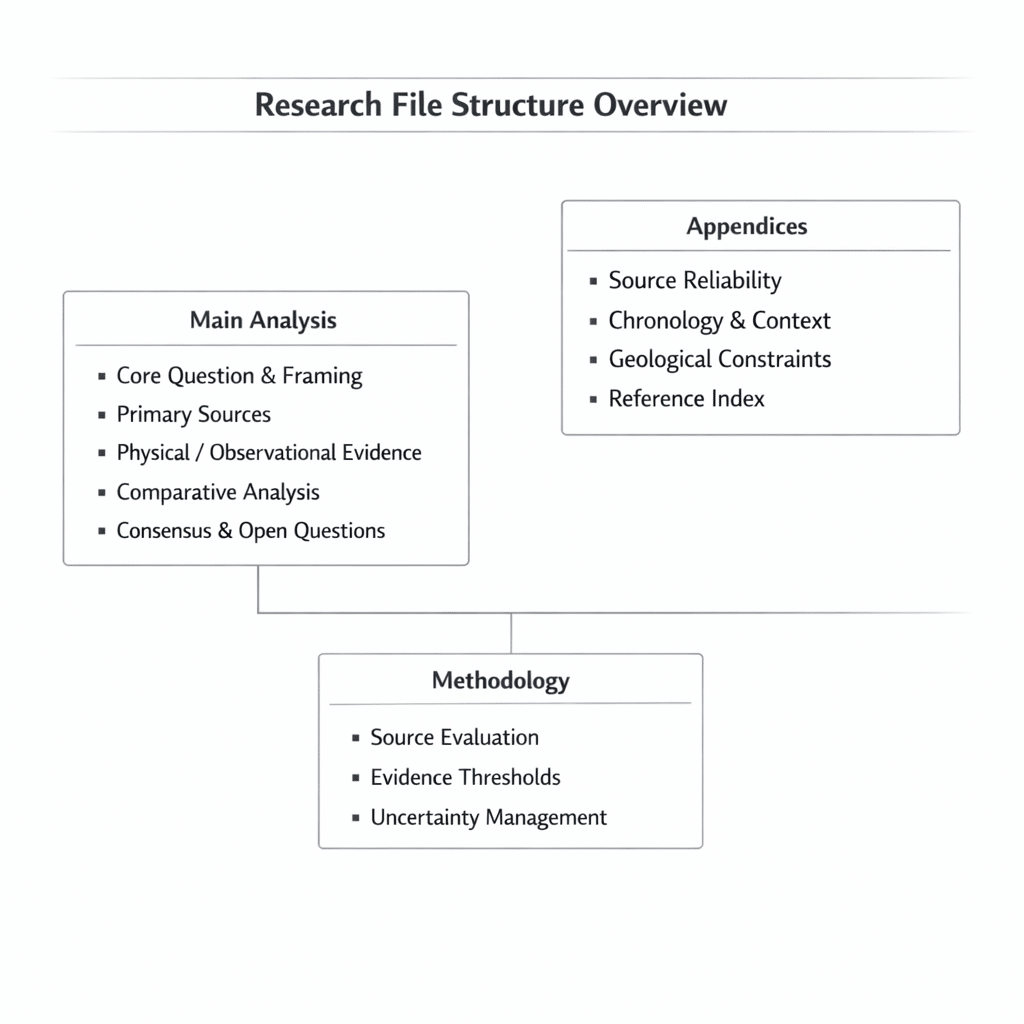
This publication is the Expanded Evidence Pack edition of the DidjaKnow research file examining Teotihuacán, one of the most precisely designed cities of the ancient world. It functions as a comprehensive reference document, extending beyond the standard research edition with additional evidence, appendices, and methodological analysis.
The investigation applies a calm, evidence-based, archaeology-first framework. It examines what excavation, survey data, and material analysis confirm about Teotihuacán’s planning, construction, and organisation, while clearly identifying where uncertainty persists despite extensive research. Interpretation is separated from evidence, and unresolved questions are treated as empirical gaps rather than speculative problems.
The expanded analysis documents Teotihuacán’s geographic advantages, construction chronology, master-planned grid, and consistent 15.5° alignment. It examines the Avenue of the Dead as an organising axis, the roles of the Pyramid of the Sun and Pyramid of the Moon, the evidence for organised state power at the Temple of the Feathered Serpent, and the structure of residential compounds supporting long-term urban stability. Engineering, materials science, water management, population diversity, and governance models are evaluated using archaeological and comparative data.
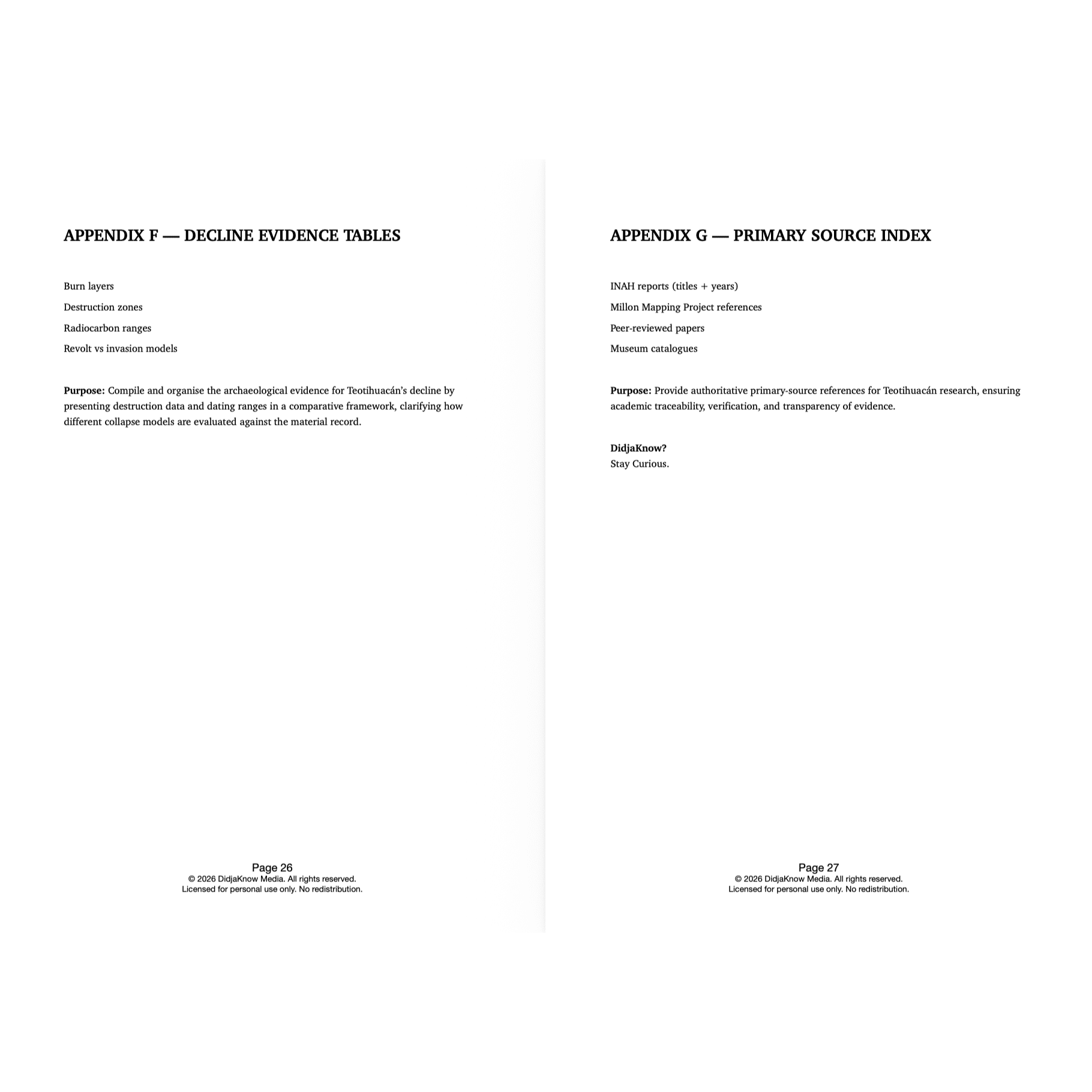
Extended appendices provide detailed supporting material, including alignment measurement data, astronomical alignment candidates, cave system documentation, construction material science, population and housing estimates, and structured evidence tables for the city’s decline. A primary source index ensures traceability across excavation reports, mapping projects, and peer-reviewed research.
Included investigations and materials cover:
-
Core framing of the Teotihuacán problem
-
Geographic setting and environmental constraints
-
Chronology of construction and expansion
-
Master planning and city-wide coherence
-
The Avenue of the Dead and urban organisation
-
The 15.5° alignment and competing explanations
-
Major ceremonial structures and their functions
-
Residential compounds and social organisation
-
Engineering and materials without metal tools
-
Water control and infrastructure planning
-
Governance models in the absence of kings
-
Evidence for decline and internal collapse
-
Mainstream consensus and unresolved questions
-
Expanded appendices, data tables, and primary source index
This Expanded Evidence Pack does not claim lost technologies, does not propose unknown builders, and does not resolve unanswered questions beyond the available evidence. Where data is incomplete, that incompleteness is stated directly.
It is intended for readers seeking a deeper evidentiary and methodological understanding of Teotihuacán beyond the standard research file, including those who want full transparency on measurement data, interpretive limits, and competing models discussed in the DidjaKnow episode.
The document is written to be read carefully as a long-form reference, not as a narrative or speculative account.
Format: Digital eBook (PDF)
Delivery: Instant download after purchase
Edition: First Digital Edition
Related products
-
Research Files
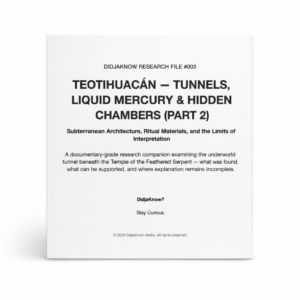
Teotihuacán — Tunnels, Liquid Mercury & Hidden Chambers (Part 2) — Research File
$ 12.00 Add to cart
Reviews
There are no reviews yet.